Posts

Valley Nordic Podcast Episode 9: The Business Of Venture Capital

Image
In this episode, Arne and I go deeper into the business of venture investing. How do venture firms raise money, how do the venture capitalists make money, how do they make investment decisions? We also talk about how the venture investing business has changed over the last three decades and what are the differences between Nordic and Silicon Valley approach to venture investing.  Useful links: Norwegian  VC in Silicon Valley  How does Silicon Valley work?  Subscribe to the podcast  here . And, see the notes from the previous episode  here . 

Traffic Lights And Brain

Image
For over a year, walking around in Palo Alto, CA, I have noticed that there has been a change in how traffic lights work.  Generally, the signals for motor vehicles and pedestrians work in sync i.e. when light turns green, the walk sign comes on at the same time. Sometime ago, the "walk" sign for the pedestrians started coming up before the light turned green. . Traffic light in Palo Alto I wonder why the city would do that. Knowing Palo Alto, it must have something to do with pedestrian safety or priority. While driving, I noticed that when the traffic light changes for the pedestrians to walk and the light for the cars remains red, my first reaction is to take the foot off the break. It takes a few microseconds to realize the light is still red. This might be dangerous for the drivers.  Does the brain notice changes in the environment first before realizing what the change is? Or, is it just social conditioning that the brain is used to seeing a ...

Valley Nordic Episode 8: Facebook Libra, Barriers To Entry, SLACK

Image
In this episode, Arne and I talk about the new Facebook cryptocurrency, Libra. Answer an audience question on what are barriers to entry for WeWork, Zoom, Airbnb, Uber, and Lyft. We end with discussing SLACK - direct IPO, business model, valuation, future prospects.  Useful links: Facebook Libra  Slack S1  SDR Subscribe to the podcast  here . And, see the notes from the previous episode  here . 

Valley Nordic Episode 7: Decision Making For Startups

Image
In this episode, Arne and I talk about decision making under uncertainty and ambiguity. How it requires a different way of thinking which is different than the linear thinking we grow up with. Startups and innovation are prime examples of working with uncertainty. Our conversation discusses an entrepreneur and a venture capitalist perspectives on seven heuristics that I have learned on decision making under high risk. The podcast is based on a Forbes article I wrote.  Useful links:  1. Forbes article on decision making for startups  2. Forbes article on how silicon valley works 3. New England Complex Systems Institute   Subscribe to the podcast  here . And, see the notes from the previous episode  here . 

Inwards vs. Outwards

An inward looking individual performs better outwards. An inward looking group performs worse outwards. 

Valley Nordic Episode 6: StitchFix, Marketing, Blockchain, and Autonomous Systems

Image
In this episode, Arne and I talk about StitchFix  - business model, valuation, and challenges. Then we move on to marketing - basics, common mistakes startups make, and a debate on branding. We end with hot or not i.e. tech trends in silicon valley - Blockchain and Autonomous Systems.  Useful links:  1. Advertising  2. Why do we buy things? Subscribe to the podcast  here . And, see the notes from the previous episode  here . 

Science and Ethics

Image
At TED 2019 in Vancouver, I facilitated a dinner conversation on science and ethics. A few years ago, I attended a class on bioethics  at Stanford and that came handy at the dinner table.  Following are my observations from the dinner: I started the conversation by asking everyone to solve the trolley problem  which is a thought experiment in ethics. Surprisingly, some participants refused to answer the trolley problem question because there is no good answer and that is the whole point. Ethics are hard.  Then, I asked the participants to define science and explain why they thought it was important to society. Everybody had a different idea about what science is and some were offended by the second part of the question i.e. why is science important. They could not explain it because "it is obvious". Source: Wikipedia After we had agreed on what science is and what ethics are, we had a very interesting and wide ranging discussion on CRISPR , ...

Silicon Valley: Evil Or Redeemable?

Image
At TED 2019 in Vancouver, I participated in a debate titled, "Silicon Valley: evil or redeemable". My position was that Silicon Valley is redeemable. I used the following arguments to defend my position:  1. The idea of Silicon Valley being "evil" mainly comes from social media's role in elections, user privacy violations, and publication of inappropriate materials. These issues are limited to three companies - Facebook, Google (YouTube), and Twitter. Silicon Valley is much bigger than that.  2. Silicon Valley creates tools which can be used for good or bad. Should the creator of the tools be held responsible for all the bad done with the tools?  3. In the year 2000, 700M people had access to the Internet. Today, over 3.2B people have access to the Internet i.e. around half the world has access to unlimited knowledge. It has happened mainly because of Silicon Valley.  4. Silicon Valley is fifth largest economy in the world, ~$2.7T,  ...

3Cs Of America

Convenience, comfort, and competition are the three pillars of the American society. 

Valley Nordic Podcast Episode 5: Zoom; Product Market Fit; AI & VR/AR

Image
In this episode, Arne & I talk about Zoom Video Communications, Inc. [Nasdaq: ZM], one of the latest tech unicorn IPOs. What is Zoom's competitive advantage? Is it sustainable? Is the stock fairly priced? Then, we discuss two very different perspectives  on Product Market Fit (PMF). How the Europeans might see PMF differently than the Americans. Finally, we discuss two mega trends in silicon valley - Artificial Intelligence (AI) and Augmented Reality (AR)/Virtual Reality (VR). Arne explains a new term, "Technology Market Fit" he came up with.  Subscribe to the podcast  here . And, see the notes from the previous episode  here . 

Locke And Hegel

"The great and chief end therefore, of Mens uniting under Commonwealths, and putting themselves under Government , is the preservation of their Property, to which in the state of nature there are many things wanting." - Locke   "Just as the blowing of the winds preserves the sea form the foulness which would be the result of a prolonged calm, so also corruption in nations would be the product of prolonged, let alone 'perpetual' peace." - Hegel  

Culture And Society

Society is the sum of those relations that are under some form of public constraint, culture is whatever we do with each other by undirected choice. If society is all that a people feels it must do, culture "is the realm of the variable, free, not necessarily universal, of all that cannot lay claim to compulsive authority " ( Burckhardt ).  Society is not to be confused with, say, natural instinct, or any other form of involuntary activity. Society remains entirely within our free choice in quite the same way that competition, however strenuous or costly to the player, never prevents the player from walking of the field of play. Society applies only to those areas of action which are believed to be necessary.  Culture can not be authentic if held within the boundaries of a society. It is often the strategy of a society to initiate and embrace a culture as exclusively its own. Culture so bounded may even be so lavishly subsidized and encouraged by soc...

Nation states

What would the world be like if we did not have nation states and if there were no boundaries to protect? 

Possibilities

Entrepreneurs and artists are the makers of possibilities. 

Morals

A society that holds its leader to a lower moral code than its average member, declines with time. 

Startups Vs Big Corporations

Working for an established company is like being an editor. One makes things better. Working for a startup is like being a writer. One creates things. 

Beliefs

An average person does not like his beliefs challenged. An above average person can debate about his beliefs. An exceptional person actively works to find non-conforming viewpoints for his beliefs. 

Valley Nordic Episode 4: B2B vs. B2C, Hardware vs. Software, Nordic vs. Silicon Valley

Image
In this episode, Arne and I, talk about how to think about Business to Business (B2B) vs. Business to Consumer (B2C) startups. Why Arne's venture capital firm, Alliance Venture , prefers to invest in B2B startups. Then, we move to talking about hardware and software startups. Why hardware startups are hard. Nordic advantage in creating hardware startups. Finally, we discuss the capital markets for startups in silicon valley and Nordic countries. How the Nordic capital markets are different.  Subscribe to the podcast  here . And, see the notes from the previous episode  here .  Please email your questions and comments to me. 

Valley Nordic Episode 3: Facebook Blockchain And Startup Operations

Image
In this episode, Arne and I talk about Facebook's plan for a cryptocurrency, how do startups start, how to scale a startup, the skills needed at different stages for startups. We also discussed a method to find a product-market fit and growth vs profit mindsets.  A few useful links that we discussed in the podcast:  1. Blockchain fundamentals  2. Net Promoter Score (NPS) WSJ Article  3. Decision Making at Startups  Subscribe to the podcast here . And, see the notes from the previous episode here .  Enjoy! 

Possible Vs. Impossible

Can the art of possible (government politics) govern the art of impossible (technology)? 

Tech

Technology is the art of impossible. 

Valley Nordic Episode 2: UBER, LYFT, And Berkshire Hathaway

Image
In this episode, Arne and I talk about UBER (valuation, how will they make money) which is going public tomorrow,  LYFT (valuation, operations) which announced 1Q 2019 earnings earlier this week. How Uber and LYFT are different, how capital markets have changed and have led to startups going IPO with losses and unpredictability about their businesses. And, we touch on my favorite shareholder meeting, which was held last week, i.e. Berkshire Hathaway.  S ubscribe to the podcast on  Apple Podcasts ,  Google Podcast , and  Spotify .  Or, l isten to the podcast  here . See the previous episode notes at  https://cdoq.blogspot.com/2019/05/valley-nordic-new-podcast.html

Valley Nordic: A New Podcast

Image
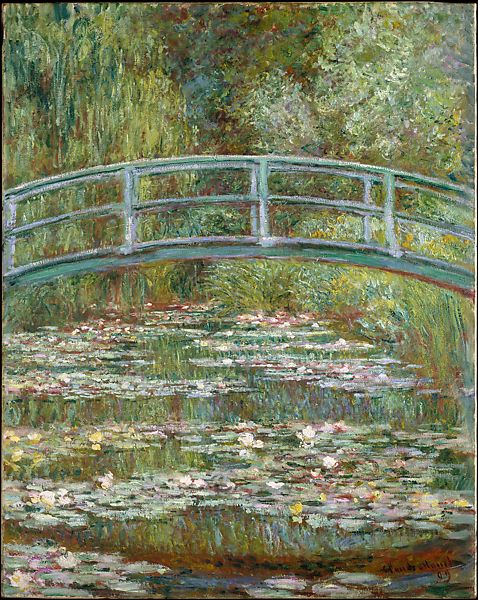
Arne Tonning , a Norwegian Venture Capitalist and I, Chander Chawla , a Silicon Valley entrepreneur, started a podcast today called Valley Nordic. The podcast is a free flowing conversation about culture, technology, and startup life. You will get four different perspectives from the podcast i.e. entrepreneur and venture capitalist; Silicon Valley and Nordic Countries.  Source: The Met, New York Today we touched on various topics ranging from Unicorn valuations, how silicon valley works , founder friendliness in Silicon Valley, labor markets, Warren Buffett, pitching to a Norwegian VC, etc.  Subscribe to the podcast on Apple Podcasts , Google Podcast , and Spotify .  Or, l isten to the podcast  here . Please send me ( chander.chawla@gmail.com)  your thoughts and topics you would like us to cover.  New episodes every Thursday evening Pacific Time.  Enjoy! 

The Art Of Viewing Art : A TED Workshop

Image
I have been fascinated with art for the last twenty years. As part of TED 2019, I gave a workshop at the Vancouver Art Gallery on "The Art Of Viewing Art." The purpose of the workshop was to make art less intimidating and more approachable for the TED attendees.  My attempt with this blogpost is to do the same for you.  --- Source: The New Yorker Often the art connoisseurs try to find meaning in art when none exists.  --- I have learned about art by looking at it, buying it, reading about it (see above), taking classes, and practicing Ikebana (Japanese art of flower arrangement) every weekend for the last fifteen years.  --- Why should society care about art? The slide above covers the main reasons. All art when it is created is created for the contemporary society. Often, it provides a commentary on the society at that time. Some art is meditative in nature i.e. it provides a space for self-reflection and m...